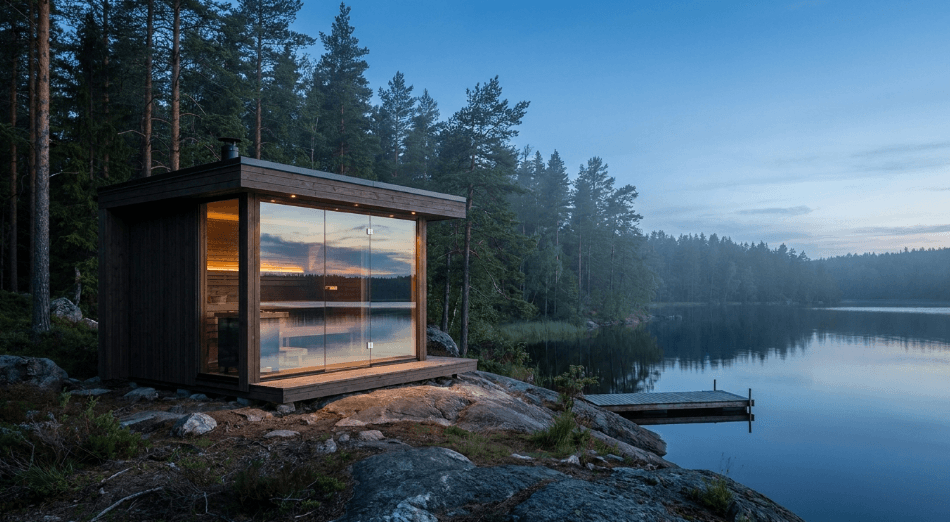
Wipe down benches and floor boards after every session with a soft brush and warm water, prop the door and vents open for at least 30 minutes to dry the cabin fully, and reseal the exterior every 12 to 18 months. Skip pressure washers, bleach, and household all-purpose cleaners on interior wood. All three strip the natural oils that keep cedar and hemlock resistant to mildew, and they raise the grain enough that bare skin starts catching splinters within a season.
Why Does Outdoor Sauna Wood Get Dirty So Fast?
An outdoor sauna takes on more grime than almost any other backyard structure, for a simple reason: it combines heat, standing moisture, and direct skin contact in one small room. Sweat and skin oils soak into unfinished benches. Water splashed on the rocks for steam leaves mineral deposits that darken over weeks. Outside, the same panels face rain, pollen, UV, and whatever runoff comes off a nearby roofline. Interior wood is usually left unsealed on purpose, since a film-forming finish would trap heat and feel unpleasant against skin, which means the boards have no protective barrier at all and rely entirely on regular cleaning and airflow to stay presentable.
What Should You Use to Clean the Interior?
A soft-bristle brush, a bucket of warm water, and patience handle almost everything. For grease or heavier grime, a mild solution of water and white vinegar, roughly one part vinegar to eight parts water, cuts through residue without leaving a chemical smell that lingers into the next heat cycle. Avoid soap, ammonia, and bleach on interior surfaces. Soap residue can smoke and smell acrid once the room heats up again, and bleach bleaches, literally, leaving blotchy pale patches that no amount of sanding fully evens out. Scrub in the direction of the grain, rinse with a barely damp cloth, and leave the door and any vents open until the wood is dry to the touch, not just dry-looking.
How Often Should You Clean an Outdoor Sauna?
A quick wipe of the benches and backrest after each use catches sweat before it sets into the grain and takes thirty seconds. Once a week, a fuller pass over the floor, lower bench slats, and door threshold clears out dust and any tracked-in debris. Monthly, check the ceiling and vent louvers, where steam condenses and can leave a thin gray film if the room is not ventilated well between sessions. A seasonal deep clean, ideally at the start and end of the heavy-use months, is the right time for light sanding on any stained spots and a close look at hardware, hinges, and the door seal.
How Do You Handle Mildew and Mold on the Exterior?
Mildew on exterior siding almost always traces back to poor airflow or standing water at the base. Check that the unit sits on a pad or footing that drains, not on soil that pools after rain, and that nothing, like stacked firewood or a leaning cover, blocks air from reaching the north-facing or shaded side of the cabin. For existing mildew, a diluted oxygen-bleach solution, not chlorine bleach, scrubbed on and rinsed off works without bleaching the stain color, followed by a fresh coat of exterior sealant once the wood is completely dry. Cedar’s natural oils give it a head start against mildew; heat-treated hemlock lacks that built-in resistance and depends more on the sealant doing its job.
Does the Wood Species You Choose Affect Cleaning Later?
It does, more than most first-time buyers expect. Cedar’s natural oils resist rot and insects with less maintenance, which is part of why it costs more per board foot. Heat-treated hemlock goes through a kiln process that closes up the cell structure and removes moisture and sugars, which cuts down on mildew risk at a lower price point, though it still needs a reliable exterior seal in wet climates. Before buying, it is worth comparing how different manufacturers finish and grade their wood. Retailers that specialize in outdoor units, including SweatDecks, list the wood species and surface treatment for each model on the product page, which is easy to check before you commit to one over another.
What Long-Term Habits Keep the Wood Looking Good?
A breathable cover during the off-season keeps snow load and direct sun off the roof without trapping moisture the way a plastic tarp would. Clearing gutters or drip lines near the sauna prevents runoff from constantly wetting one wall. Checking hinges, latches, and any exposed fasteners twice a year catches rust before it stains the wood around it. And resisting the urge to reach for a stronger cleaner when a stain does not budge on the first try matters more than any single product choice; wood that gets sanded aggressively or hit with harsh chemicals every time it looks a little dull ages faster than wood that is simply cleaned consistently and left to weather naturally.
Regular upkeep is worth the ten minutes it takes, because the payoff isn’t just cosmetic. Research on sauna bathing has associated frequent use with measurable cardiovascular benefits, which only accrue if the unit stays pleasant enough to actually use through the winter and not just the first month after installation.
Frequently Asked Questions
Can you use a pressure washer on outdoor sauna wood?
No. Pressure washers drive water into the grain and strip the natural oils that keep cedar and hemlock resistant to rot. A soft brush, warm water, and hand pressure remove the same grime without raising the fibers or forcing moisture behind the boards.
How often should the exterior of an outdoor sauna be resealed?
Most owners reseal or re-stain the exterior every 12 to 18 months, sooner in coastal climates or spots with heavy afternoon sun. A faded, dry-looking surface that no longer beads water is the clearest sign it is due.
Is cedar or heat-treated hemlock easier to keep clean?
Cedar holds up slightly better with less upkeep because its natural oils resist mildew and insects on their own. Heat-treated hemlock is close behind and often costs less, but it benefits from a bit more attention to exterior sealing in wet regions.
What removes dark water spots on sauna benches?
Light hand-sanding with 120 to 150 grit sandpaper, sanding with the grain, usually lifts mineral staining left by sweat and water thrown on the rocks. Follow with a wipe-down and let the wood dry fully before the next session.
Does an outdoor sauna need cleaning in winter?
Yes, though less often. Snow and ice sitting against the base or roofline can trap moisture, so clearing drifts away from the structure and checking the door seal matters more in winter than scrubbing the interior.
References
- Laukkanen, T., et al. “Cardiovascular and Other Health Benefits of Sauna Bathing: A Review of the Evidence.” Mayo Clinic Proceedings, 2018. https://pubmed.ncbi.nlm.nih.gov/30077204/
- Hussain, J., Cohen, M. “Clinical Effects of Regular Dry Sauna Bathing: A Systematic Review.” Evidence-Based Complementary and Alternative Medicine, 2018. https://pubmed.ncbi.nlm.nih.gov/29849692/
- Kauppinen, K. “Benefits and risks of sauna bathing.” The American Journal of Medicine, 2001. https://pubmed.ncbi.nlm.nih.gov/11165553/