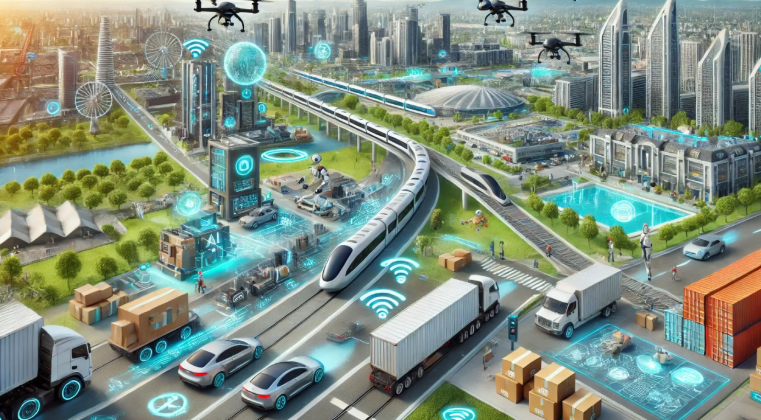
Artificial intelligence is reshaping the transportation sector through various applications. Its role in autonomous vehicles has decreased accident rates, while smart traffic systems enhance urban mobility. In logistics, AI optimizes supply chains, reducing costs and improving efficiency. However, significant challenges remain, including regulatory hurdles and data privacy concerns. Understanding these complexities is crucial for leveraging AI’s full potential in transportation systems. What implications might these factors have for the future of mobility?
Impact of AI on Autonomous Vehicles
As the demand for safer and more efficient transportation solutions grows, the integration of artificial intelligence (AI) into autonomous vehicles has emerged as a transformative force.
Safety improvements are evident through enhanced decision-making algorithms, reducing accident rates significantly.
However, ethical considerations regarding liability and moral decision-making remain critical, as the deployment of AI necessitates a balance between innovation and societal responsibility in transportation systems.
See also: The Role of AI in Medical Diagnosis
Enhancing Traffic Management With AI
While traditional traffic management systems often struggle to adapt to fluctuating traffic patterns, the implementation of artificial intelligence (AI) is revolutionizing how urban environments manage vehicle flow and congestion.
Smart traffic systems leverage data analytics to predict traffic volumes and optimize signal timings, enhancing efficiency.
This proactive approach not only alleviates congestion but also fosters greater mobility freedom for urban inhabitants.
AI in Logistics and Supply Chain Optimization
AI is transforming logistics and supply chain optimization by enabling companies to harness vast amounts of data for more informed decision-making.
Warehouse automation enhances operational efficiency, while advanced algorithms improve inventory forecasting accuracy.
By analyzing patterns and trends, AI facilitates real-time adjustments, reducing costs and minimizing waste.
This data-driven approach empowers businesses to streamline processes and adapt swiftly to market demands, fostering operational freedom.
Challenges and Future Directions in AI Transportation
Although significant advancements have been made in the integration of artificial intelligence within transportation, several challenges persist that hinder its full potential.
Key issues include navigating AI ethics, establishing robust regulatory frameworks, and ensuring data privacy.
Furthermore, public perception affects technology integration, while infrastructure challenges can impede progress.
Addressing these factors is crucial for realizing AI’s transformative capabilities in transportation systems.
Conclusion
In conclusion, the integration of AI into transportation serves as a double-edged sword, slicing through the complexities of modern mobility while revealing challenges that must be navigated. As autonomous vehicles glide along roads and smart traffic systems orchestrate urban flow like a conductor leading a symphony, the potential for a safer and more efficient future is promising. However, the shadows of regulatory hurdles, data privacy concerns, and public skepticism loom large, necessitating a balanced approach to realize this transformative vision.