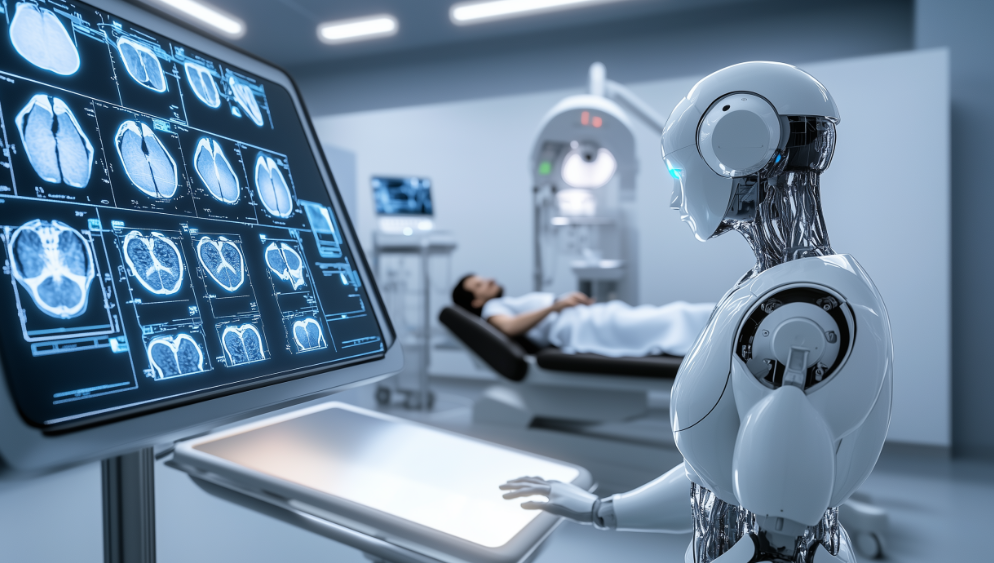
Artificial intelligence is increasingly shaping the landscape of medical diagnosis. Its ability to analyze vast datasets enhances both the accuracy and speed of identifying various health conditions. This technology not only supports early detection of diseases but also aids in formulating personalized treatment plans. However, the integration of AI in healthcare is not without challenges. Understanding these complexities is crucial as the future of diagnostics continues to evolve.
Benefits of AI in Medical Diagnosis
As healthcare systems increasingly incorporate advanced technologies, the benefits of AI in medical diagnosis become more evident.
AI enhances diagnostic accuracy by analyzing vast datasets, leading to quicker and more precise identification of conditions.
This improvement in AI accuracy significantly impacts patient outcomes, ensuring timely interventions and personalized treatment plans.
Ultimately, AI empowers healthcare providers to deliver better care, fostering a more efficient medical landscape.
See also: The Role of AI in Financial Services
Challenges and Limitations of AI Technology
Despite the promising benefits of AI in medical diagnosis, several challenges and limitations hinder its widespread implementation.
Data privacy concerns, algorithm bias, and ethical concerns complicate trust in AI systems.
Additionally, regulatory hurdles and integration challenges within existing healthcare frameworks impede progress.
The dependency on high-quality training data further exacerbates these issues, underscoring the need for careful consideration in deploying AI technologies effectively.
Case Studies: AI Transforming Diagnostic Practices
A growing number of case studies illustrate how AI is transforming diagnostic practices across various medical fields.
These AI applications enhance diagnostic accuracy by analyzing vast datasets, identifying patterns, and predicting outcomes with greater precision.
For instance, AI algorithms have successfully detected early signs of diseases like cancer and diabetic retinopathy, significantly improving patient outcomes and empowering healthcare professionals with reliable tools for informed decision-making.
The Future of AI in Healthcare Diagnostics
While advancements in AI technology continue to evolve, the future of healthcare diagnostics appears increasingly promising.
Utilizing predictive analytics, AI systems are expected to enhance diagnostic accuracy, allowing for early detection of diseases.
This innovation aims to significantly improve patient outcomes by facilitating personalized treatment plans and efficient resource allocation, ultimately fostering a more responsive and effective healthcare system for all.
Conclusion
In conclusion, the role of AI in medical diagnosis is nothing short of revolutionary, akin to a magic wand that transforms healthcare into a realm of unparalleled precision and speed. With the ability to sift through mountains of data in the blink of an eye, AI not only detects diseases before they become formidable foes but also crafts personalized treatment plans as if by sorcery. As this technological marvel continues to evolve, the future of healthcare diagnostics gleams with infinite possibilities.